
Redesigning Dayforce Recruiting From Fragmented Tools to a Cohesive Hiring Platform
As Lead Product Designer, I led the redesign of Dayforce’s Talent Acquisition suite, transforming recruiting from a collection of disconnected features into an integrated platform that helped companies hire faster, evaluate candidates more effectively, and scale their hiring processes with confidence.
This work contributed to Dayforce securing the Government of Canada as a customer, representing 300,000+ new users and $25M in annual recurring revenue.
Company
Dayforce
Human Capital Management Software
My Role
Lead Product Designer
Duration
18 months
The Problem
Recruiting generated 30% of Dayforce’s revenue, but the system was quietly breaking down. Years of piecemeal feature additions had created a fragmented experience that forced recruiters into workarounds and left candidates frustrated and confused. Recruiters were spending their time navigating disjointed screens instead of evaluating talent. Candidates couldn’t track their progress through the hiring process. Hiring timelines were slipping. Quality was suffering. And Dayforce was at risk of losing customers to more cohesive recruiting platforms. The product needed fundamental reimagining, not incremental fixes.
How I Contributed
As Lead Product Designer, I owned the strategic direction of Talent Acquisition while working hands-on across research, design, and strategy. I also guided 3-5 designers through their own projects that contributed to the larger vision.
My responsibilities included:
- Conducted research strategy for recruiter workflows and pain points
- Synthesized insights into strategic vision and direction
- Facilitated cross-functional workshops to align teams
- Designed core experiences: dashboard, filtering, profiles
- Coached designers connecting individual work to vision
- Created prototypes influencing three year roadmap
Who I worked With
Design
3-5 Product Designers, Lead Researchers, UX Researchers
Product
Director of Product Management, Product Managers for distinct workflow areas
Engineering
Engineering Managers, Software Engineers responsible for implementing features
How I Shaped Product Strategy
Before redesigning, I needed to understand the strategic opportunity and whether this was a problem of execution or platform vision.
I focused on answering these questions:
- What are recruiters actually trying to accomplish, independent of our system’s constraints?
- Where are recruiters and candidates experiencing friction across the hiring lifecycle?
- How is the recruiting market evolving, and where can Dayforce differentiate?
- What usage patterns and customer feedback reveal the biggest gaps?
- Which improvements would have the most impact on customer retention and competitive positioning?
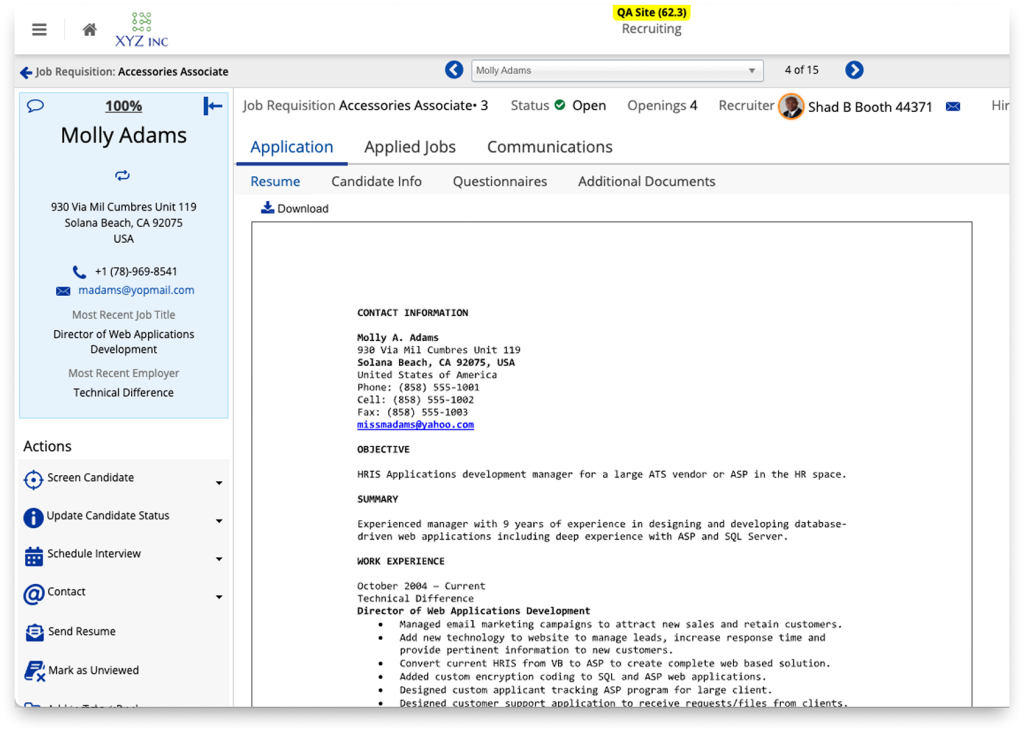
Before: Recruiting felt like a collection of separate tools, not a platform.”
My Approach
To answer these questions, I led a multi-phase discovery process that combined customer research, competitive analysis, and data exploration.
Stakeholder Interviews
Interviewed business stakeholders to understand market opportunities and strategic positioning in enterprise recruiting.
Persona Development
Conducted in-depth interviews with recruiters across different customer segments to build personas and understand their workflows and pain points.
Service Audit and JTBD
Audited the existing recruiting experience, grouping capabilities into themes and reframing them as customer outcomes using Jobs to Be Done framework.
Journey Mapping
Mapped the full recruiting lifecycle from requisition through onboarding and evaluated how competitors structured core workflows.
Concept Testing
Conducted concept testing with low-fidelity prototypes and established a bi-weekly advisory board with internal recruiters and HR professionals to validate design direction.
This research revealed consistent patterns about how recruiting actually works versus what our system assumed. Several critical insights emerged that would shape every decision going forward.
What we learned
As we moved through research and concept testing, a few clear patterns emerged. These insights directly informed the direction of the experience.
Recruiters need clarity and prioritization, not more data
Recruiters juggle dozens of positions and hundreds of candidates. They don’t need metrics; they need guidance on where to focus attention. The system’s first interaction should surface actionable work, not overwhelm with reporting data.
Filtering is how recruiters think, not a feature
High-volume recruiting depends on filtering to narrow hundreds of applicants. The legacy experience forced one-at-a-time filtering with no way to save searches. This friction was costing recruiters hours weekly.
Candidate review is the core workflow, and it’s broken
Reviewing applications is the most time-consuming part of a recruiter’s day, yet required clicking between slow-loading profiles, searching through dense information, and losing context. Every UI friction point is a second not spent evaluating talent.
Recruiting requires workflow flexibility, not rigid processes
Recruiters source actively, review fresh batches, and recycle existing candidates. The system needed to support multiple modes without forcing one workflow on everyone.
Candidate and recruiter experiences are deeply connected
Poor candidate experiences lead to drop-offs, declined offers, and negative reviews. Recruiter success depends on both their efficiency and providing candidates with professional, clear experiences.
Turning Insights into Solutions
Each solution was designed to address key user needs and translate findings into more intentional product decisions.
Insights → Innovation
Recruiters need clarity, and prioritization; not more data
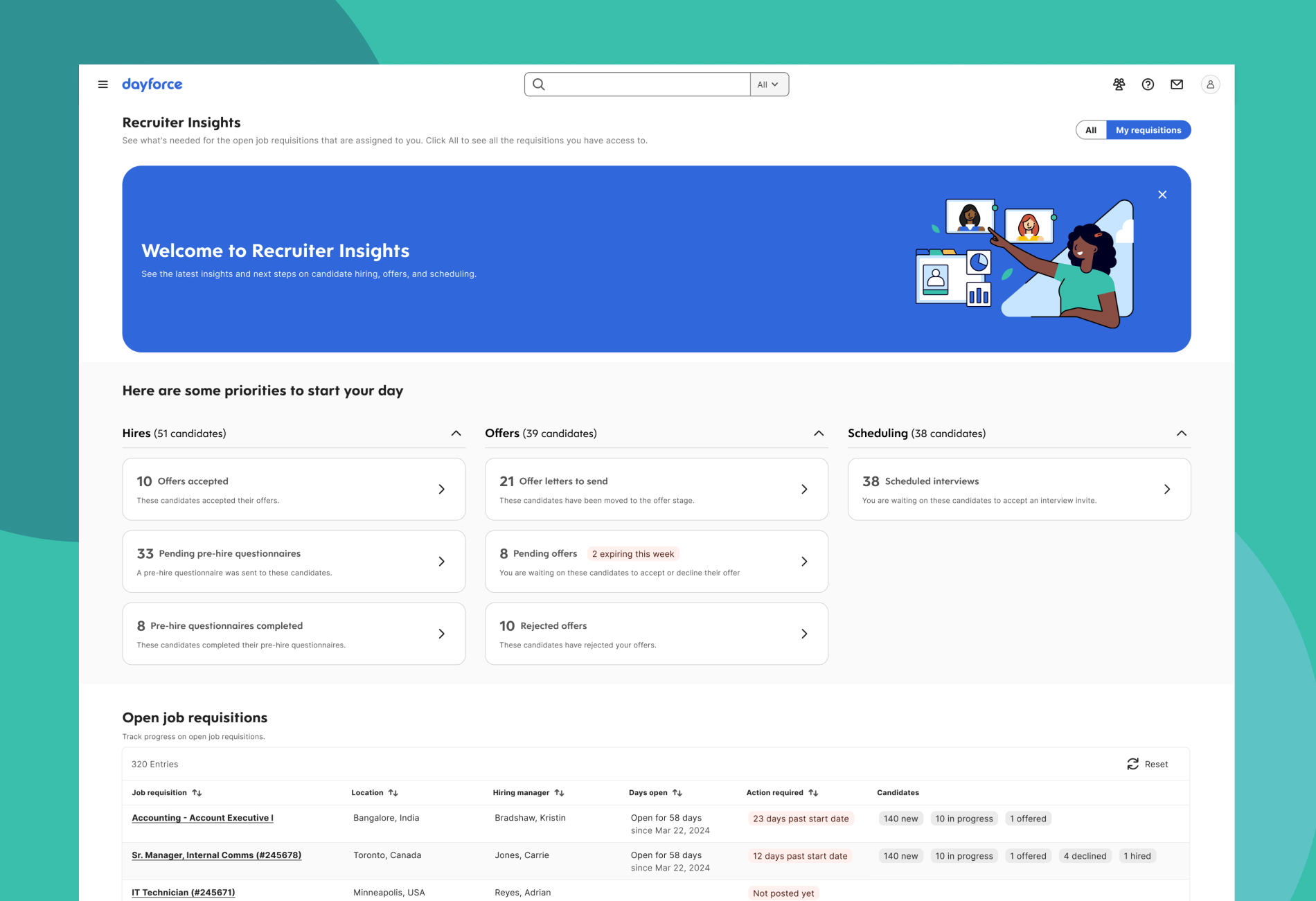
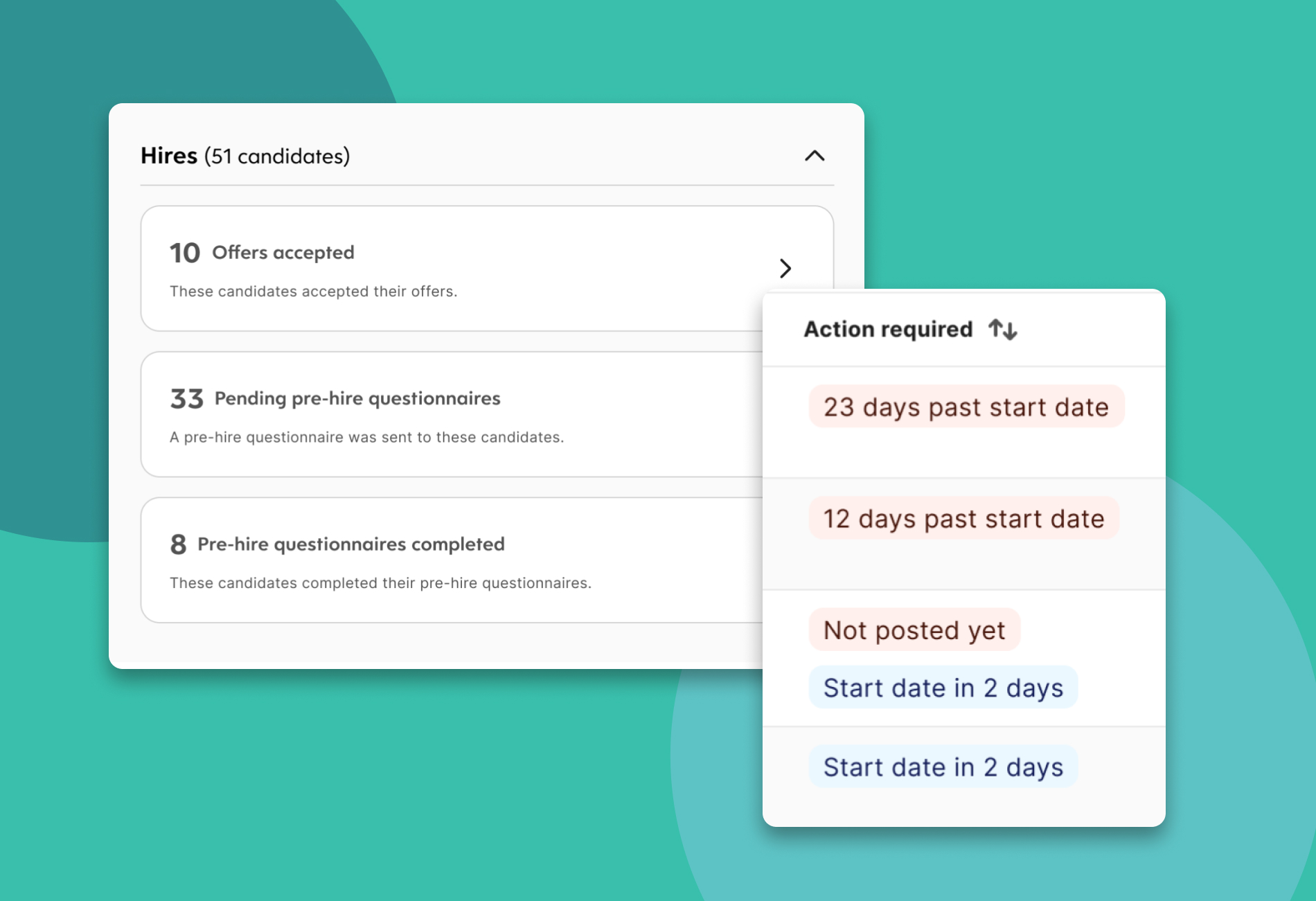
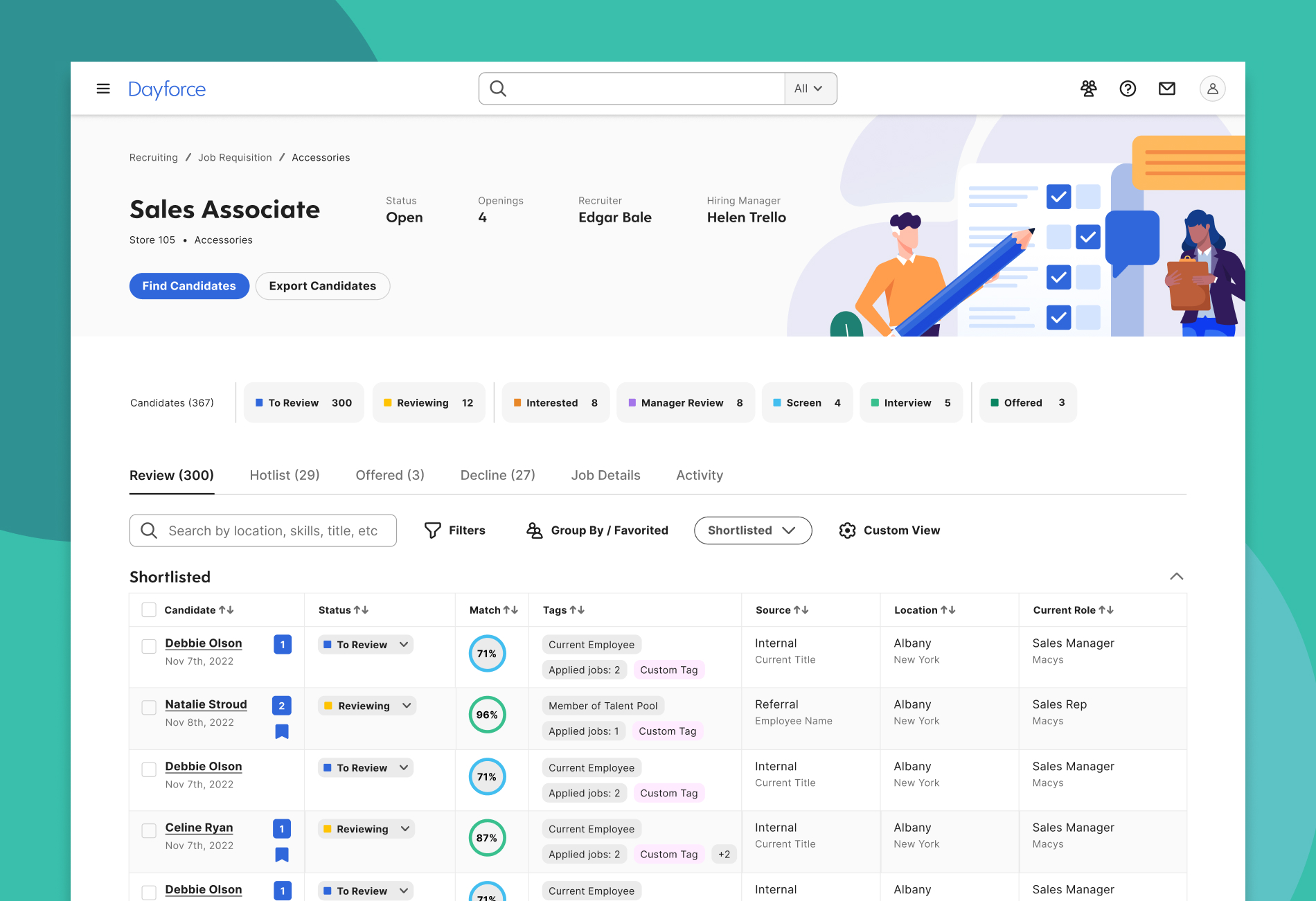
Transformed the dashboard from a reporting tool to an action hub
The old dashboard displayed metrics useful for managers but not recruiters. We redesigned around “Your Priorities,” surfacing actionable work: requisitions needing immediate attention, candidates requiring action, and collaborative opportunities. Recruiters can view their own work by default or toggle to all requisitions when covering for teammates. This required collaborating with our design system team (Everest) to develop a new segmented control component. The simple interface masks thoughtful engineering to ensure performance at scale.
Insights → Innovation
Filtering is how recruiters think
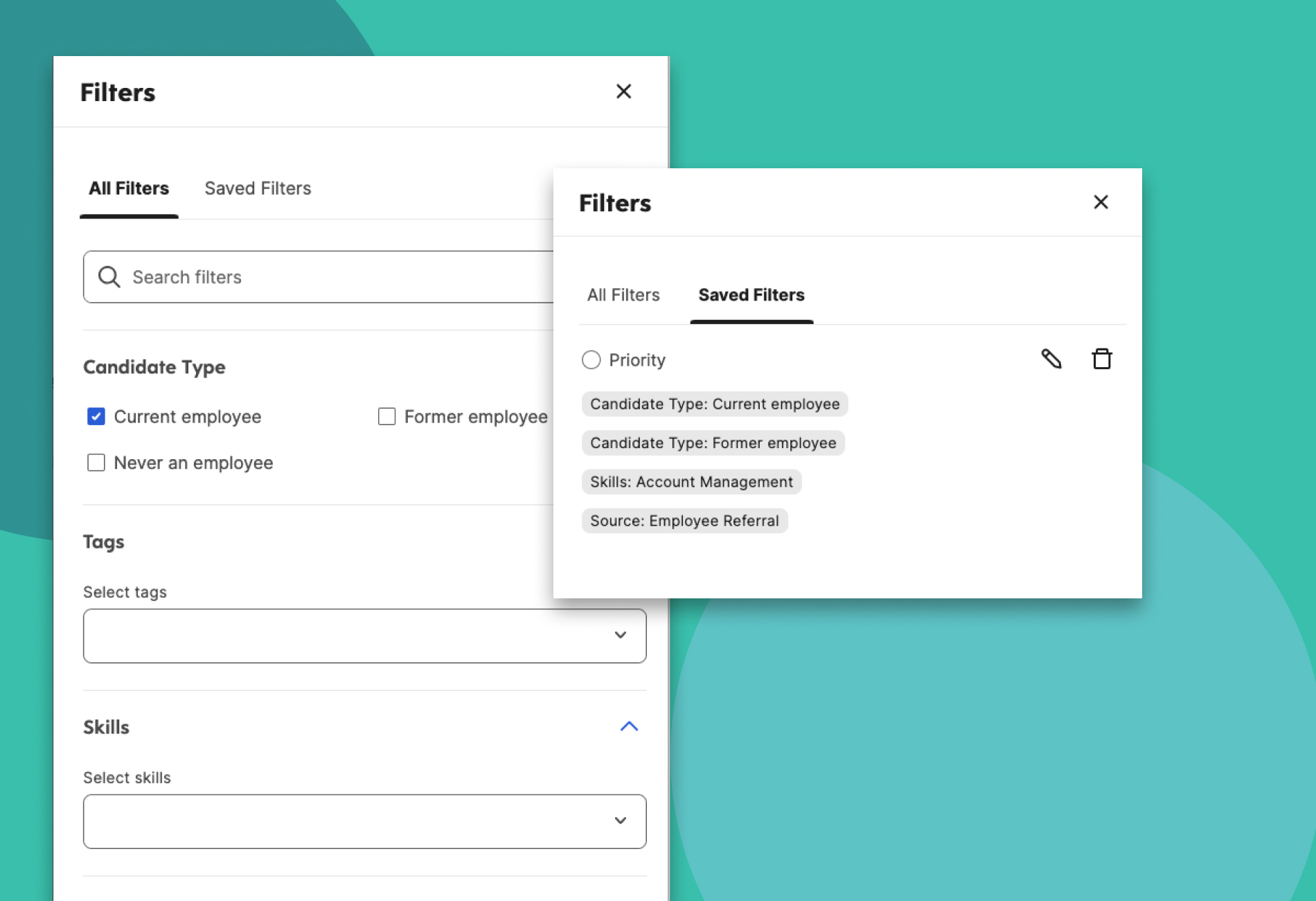
Redesigned filtering around how recruiters actually search, not system constraints
The legacy filtering experience forced one-at-a-time selections with no ability to save searches. We redesigned filtering in a dedicated panel with multi-select for all filter types, search functionality to find options quickly, and centralized saving and managing of searches in one place. We also introduced new filter options (location, proximity, company, job title, education) based on recruiter feedback. Close collaboration with our design system team ensured the new patterns were reusable across Dayforce. Usability testing revealed confusion about accessing saved filters, so we redesigned the information architecture based on feedback.
Insights → Innovation
Candidate review workflow is broken
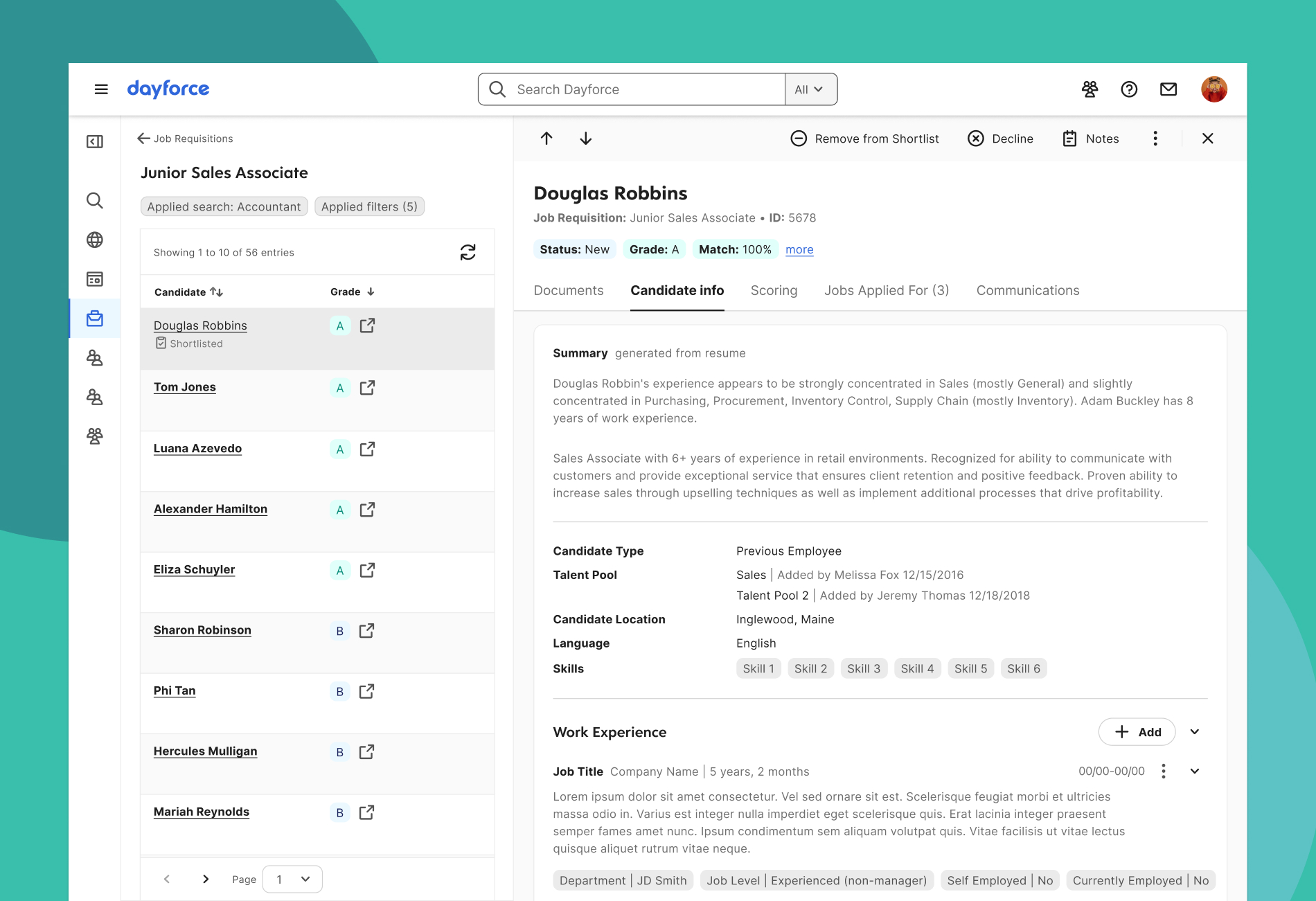
Introduced split view to keep recruiters in flow while moving through candidates
We introduced split view to show the candidate list and profile side-by-side, keeping recruiters in flow without losing context. We limited functionality intentionally—mass actions were removed, filters must be adjusted before entering split view, and only two columns display at a time. We optimized performance to make resume loading 90% faster than legacy. Critical actions like “Shortlist” and “Decline” moved from a buried sidebar to a prominent toolbar. We partnered with accessibility teams from the start to ensure the layout worked for screen readers, keyboard navigation, and assistive technologies.
Insights → Innovation
The Candidate Experience
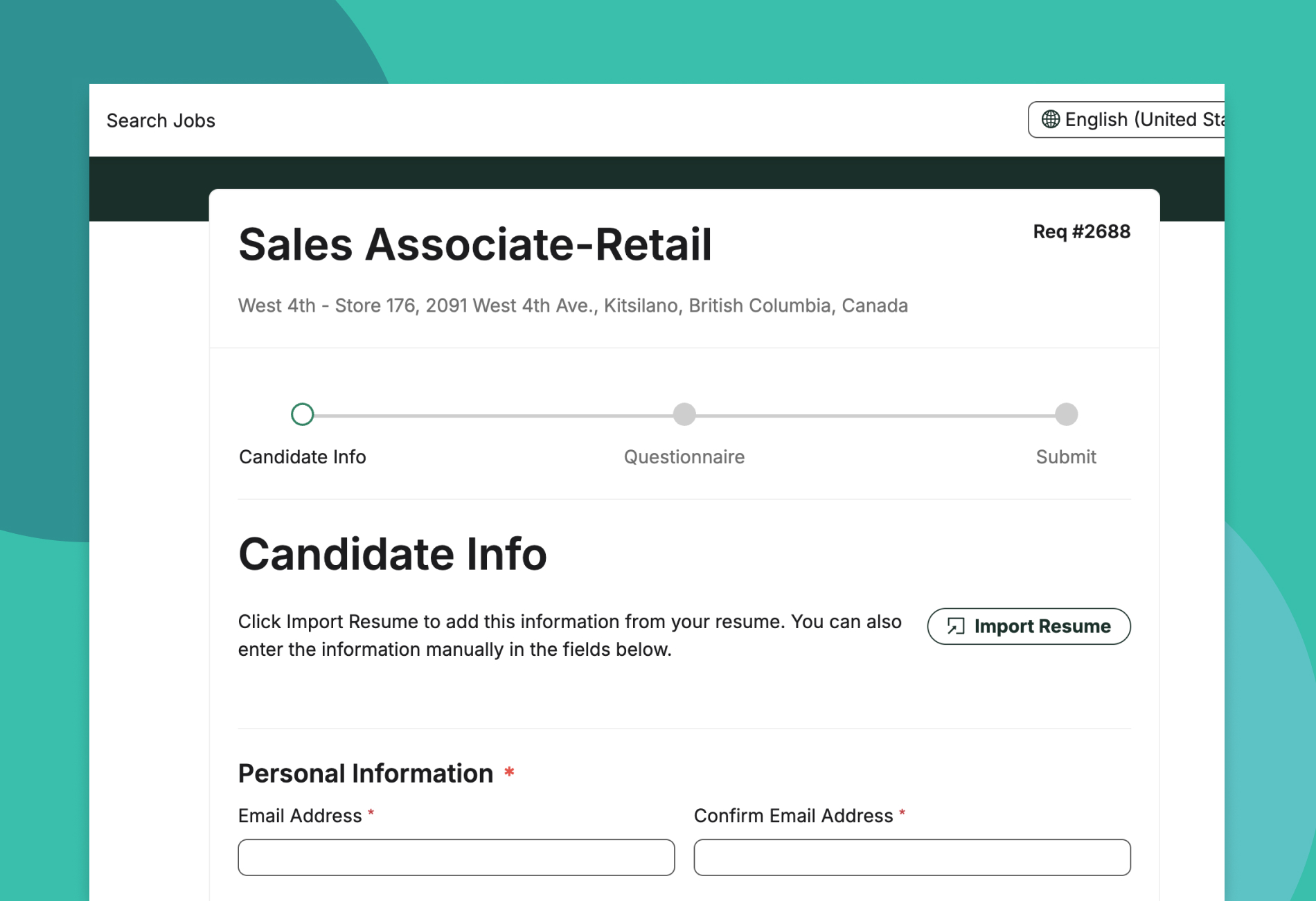
Transformed generic job applications into a professional hiring portal
We redesigned the candidate job search page from a generic form to a professional hiring portal. Candidates see clear job descriptions positioned within company culture and values, application flows matching the hiring process, interview scheduling they control, status tracking, and personal communications. From a recruiter’s perspective, a well-designed candidate experience means better-quality applications, fewer drop-offs, richer candidate data, higher offer acceptance rates, and stronger employer brand.
The Impact
Adoption and Business Outcomes
The new dashboard and filtering tools saw rapid adoption among recruiters. Split view quickly became the primary way to review candidates. The Government of Canada selected Dayforce as their HCM platform, bringing 300,000+ new users and $25M in annual recurring revenue.
Recruiter Productivity
Usage data and recruiter feedback confirmed meaningful improvements in hiring velocity and efficiency. Recruiters spent less time navigating the system and more time evaluating talent.
Organizational Impact
Design became a strategic partner influencing roadmap decisions. We established research practices and created reusable components that became foundational across the organization and informed three years of roadmap decisions.